Cracking the Code: What RTP and House Edge Actually Mean for Your Wallet
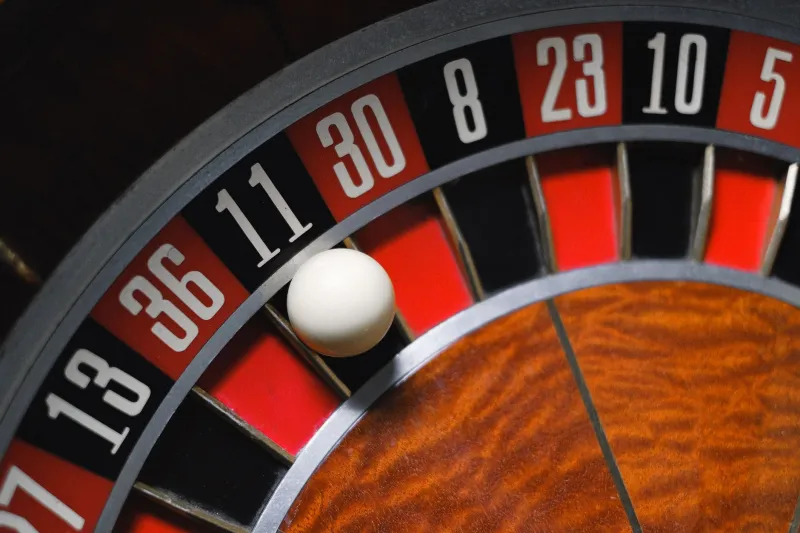
Let's be real for a second. Most people who sit down at a slot machine, open an online table game, or place a sports bet aren't thinking about percentages. They're thinking about the rush, the possibility, the idea that this spin or this hand might be the one. That's not a criticism — it's just how entertainment works.
But here's the thing: the players who last the longest, stretch their bankrolls the furthest, and actually walk away ahead? They took five minutes to understand two numbers that the gaming industry rarely puts in a spotlight. Those numbers are RTP and house edge — and once you get them, you'll never look at a game the same way again.
What RTP Actually Means (And What It Doesn't)
RTP stands for Return to Player, and it's expressed as a percentage. A slot game with a 96% RTP theoretically returns $96 for every $100 wagered across all players over time. Sounds pretty reasonable, right? Almost generous.
Here's where most people misread it: that figure is a long-run statistical average, not a session guarantee. It doesn't mean you'll get $96 back every time you put in $100. It means that if millions of spins are calculated together, the math trends toward that percentage. On any given night, your personal results can swing wildly in either direction.
That said, RTP is still one of the most useful tools a player has. A game with 94% RTP is meaningfully worse for you than one at 97%, all else being equal. The difference compounds fast. Over a $500 session, that 3% gap could mean $15 more in your pocket — or the difference between going home even versus going home down.
The House Edge: The Flip Side of the Same Coin
If RTP is what comes back to players, house edge is what stays with the operator. They're literally inverse: a game with 96% RTP has a 4% house edge. Simple math, massive implications.
Different games carry wildly different house edges, and that's where smart players find their leverage:
- Blackjack (basic strategy): House edge as low as 0.5%
- Baccarat (banker bet): Around 1.06%
- European Roulette: Approximately 2.7%
- American Roulette: Jumps to 5.26% (thanks to that extra double-zero)
- Keno: Can exceed 25-30%
- Penny slots: Often 10-15%, despite the low-stakes vibe
The takeaway here is stark. Choosing American roulette over European isn't just a cosmetic difference — you're essentially doubling the built-in disadvantage. That's not marketing noise; that's arithmetic.
Where the Marketing Gets Loud (And Misleading)
Casinos and gaming platforms love to advertise their highest-RTP games in promotional material. "Play our 98% RTP slots!" sounds incredible until you realize that one or two flagship titles don't represent the broader game library. The average RTP across a full casino floor — or an online platform's full catalog — is typically much lower than the headliner numbers suggest.
There's also the volatility factor, which rarely gets mentioned in the same breath as RTP. A game can have a 97% RTP but be extremely high-volatility, meaning long dry spells punctuated by rare big wins. Another game at 94% RTP might pay small amounts constantly. Same headline number, completely different playing experience and risk profile.
High-volatility games aren't bad — they're just suited to players with deeper bankrolls and longer patience. Knowing your own risk tolerance before choosing a game is half the strategic battle.
Where Real Player Opportunity Lives
Here's the part casinos genuinely prefer stays quiet: there are pockets of the gaming world where the math tilts closer to neutral — or even temporarily in a player's favor.
Video poker, particularly Jacks or Better with full-pay tables, can offer RTPs above 99% with correct strategy applied. That's not a typo. The skill component in video poker is real, and players who study optimal hold strategies can narrow the house edge to fractions of a percent.
Blackjack with basic strategy is another well-documented case. The decisions you make at the table genuinely affect outcomes. A player who always hits 16 against a dealer's 7 versus one who knows the statistically optimal play isn't experiencing the same game, even if the table looks identical.
Sports betting and daily fantasy introduce a different dynamic entirely — here, you're not playing against a fixed mathematical edge but against other bettors or the market's perception of probability. Sharp bettors who identify line inefficiencies or exploit information advantages can find positive expected value plays, though the margin is thin and the research demands are high.
Using RTP as a Shopping Tool
The practical move? Before you commit real money to any game on any platform, look up the RTP. Reputable platforms publish this information — sometimes buried in the game info tab, sometimes available in the help section. If a platform makes it difficult to find, that tells you something.
Once you know the RTP, pair it with your session budget and expected number of bets. If you're planning a two-hour session wagering roughly $5 per spin, you can estimate your theoretical loss rate and decide whether that game fits your entertainment budget.
This isn't about taking the fun out of gaming. It's about playing informed — understanding what you're buying when you place a bet, and making choices that match your actual goals, whether that's a long, low-risk session or a shot at a high-variance jackpot.
The Bottom Line
The house edge isn't a secret conspiracy. It's how the business model works, and that's fine. But treating every game as if the odds are identical? That's where players quietly lose more than they need to.
Know your RTPs. Understand volatility. Pick games that match your budget and playstyle. And remember — the boldest move isn't always the biggest bet. Sometimes it's the informed one.